Cross-Device Context: Why Your AI Forgets You Every Time You Switch Screens
Your AI has amnesia, and it’s not a bug—it’s a feature of its flawed design. You spend ten minutes on your laptop briefing a chatbot on a new project, then pick up…
By The Aware AI Team
# Cross-Device Context: Why Your AI Forgets You Every Time You Switch Screens
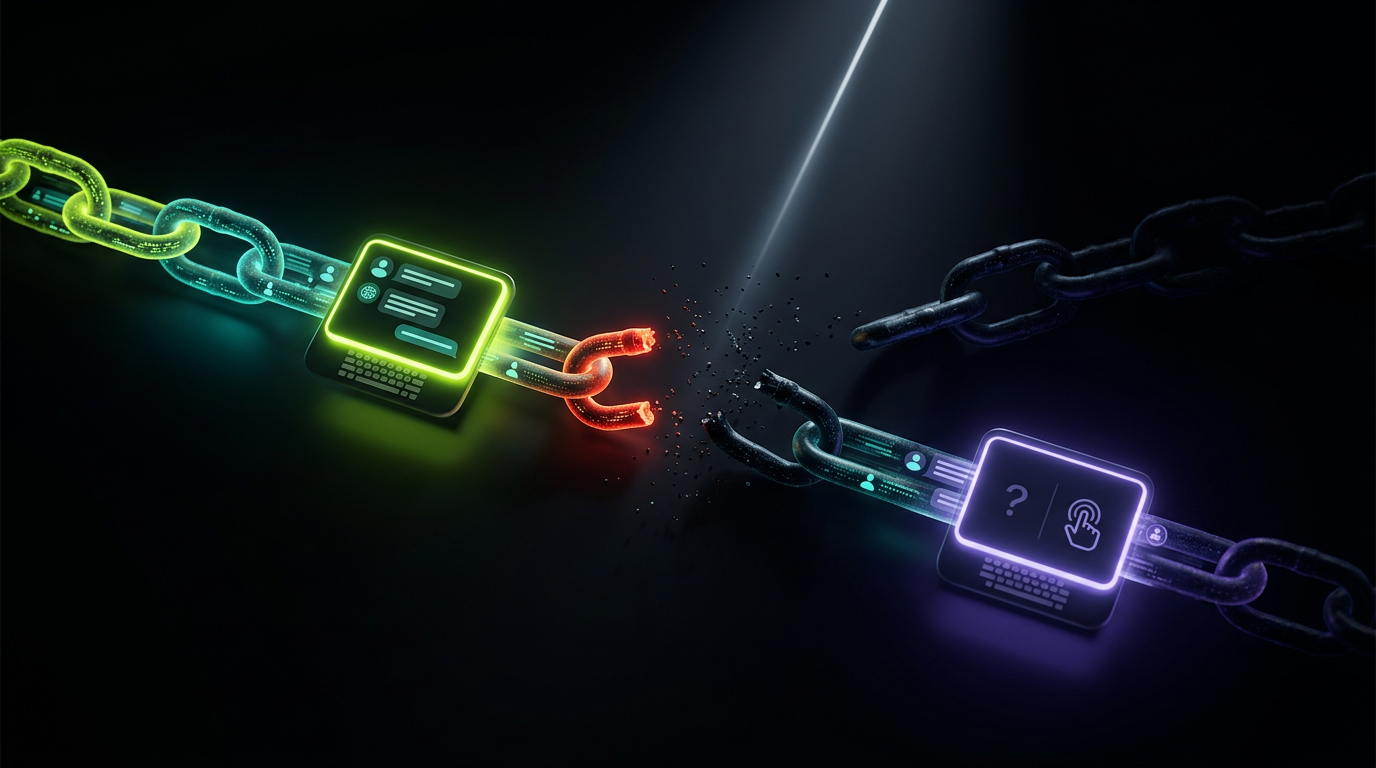
Your AI has amnesia, and it’s not a bug—it’s a feature of its flawed design. You spend ten minutes on your laptop briefing a chatbot on a new project, then pick up your phone to ask a follow-up question, and it stares back at you with a blank digital slate. This isn't just an annoyance; it’s a fundamental failure that exposes the gap between the promise of "personal AI" and the reality of siloed, forgetful tools. For an AI to be truly useful, it needs seamless **cross device AI context**.
## The great digital amnesia
Think of your current AI assistant as an incredibly capable employee who suffers a total memory wipe every time they walk through a doorway. On your Mac, they’re a genius. The moment you pull out your iPhone, they don't know who you are, what you're working on, or what you discussed thirty seconds ago.
This constant reset forces you into the role of a patient archivist, re-explaining, re-uploading, and re-stating context you’ve already provided. It breaks your workflow and adds a layer of tedious management to a tool that was supposed to remove it. The purpose of an assistant is to offload mental load, not create a new job for you as its personal biographer.
This isn't a minor inconvenience. It is the single biggest barrier to AI becoming a truly integrated partner in your work.
## Why your "personal" AI isn't personal
The problem is architectural. Most AI products were not built for you; they were built for your device. This user-last approach is the source of the fragmentation you feel every day.
### Device-centric, not user-centric
Most developers build an iOS app, a desktop app, or a web app. The user is an afterthought. The AI’s "brain" lives entirely within that single instance. When you open the application on a new device, you're starting a completely separate conversation with a completely different brain. It might sync your chat history, but that’s not the same as syncing understanding.
The AI isn't yours. It belongs to the phone, the laptop, or the browser tab it's trapped in. A truly personal AI needs to be user-centric, existing as a continuous layer that follows you, not a program you repeatedly have to boot up from scratch.
### The privacy-as-an-excuse problem
Some developers will claim this siloed approach is for your privacy. While on-device processing has its merits, using it as an excuse for a lack of **ai sync across devices** is a technical cop-out. It’s the easier, lazier path.
> The goal of modern software should be to serve the user, not to take the easiest development path. When an AI makes you do the work of connecting the dots, it has failed.
Building a system that syncs context securely and privately is harder. It requires better engineering and a more sophisticated understanding of data security. But it is not impossible. Protecting user data and providing a seamless, multi-device experience are not mutually exclusive goals. Treating them as such is a failure of imagination.
## The anatomy of continuous AI context
For an AI to break free from a single screen, it needs a completely different architecture. It requires a persistent, unified memory that is accessible from anywhere but belongs only to you. This is the foundation of **continuous ai context**.
This isn't just about storing files in the cloud. It’s about creating a living memory that understands the relationships between people, projects, ideas, and timelines.
A truly useful AI memory layer must hold more than just chat logs. It needs to track:
* **Key entities:** The names of people, companies, and projects you work on.
* **Conversational threads:** The history of your decisions and directives.
* **Your preferences:** How you like your summaries formatted or which tone to use in a draft.
* **Ongoing tasks:** The status of work in progress, no matter where it was last updated.
* **Implicit context:** The unspoken connections between a meeting you had this morning and a document you are working on now.
This shared understanding is what separates a gimmick from a genuine cognitive partner. It's the difference between a calculator and a chief of staff.
## The cost of fragmented context
The friction from your AI’s amnesia isn't just a feeling. It has real, measurable costs that compound throughout your day, draining your most valuable resources: time and focus. You are constantly paying a tax for using disconnected tools.
This tax comes in several forms:
1. **Repetitive labor.** You find yourself re-stating the goals of "Project Atlas" every time you switch from your desktop to your phone. You copy and paste the same background information into a new chat window, doing the manual work the AI was supposed to automate.
2. **Lost insights.** An idea for a marketing angle hits you on a walk, and you dictate a quick note into your phone. But that context is now stranded there. When you sit down at your laptop to write the copy, the AI has no memory of that insight, and unless you manually bridge the gap, the idea is lost.
3. **Broken flow state.** The human brain thrives on uninterrupted focus. Every time you have to stop your real work to "catch up" your AI assistant, your concentration is shattered. This constant context-switching is a silent killer of deep work and creative momentum.
This friction adds up. Five seconds here, thirty seconds there—it becomes hours of wasted time and a persistent, low-grade frustration that saps your creative energy. Your tools should clear paths, not create obstacles.
## The failure of cross device AI context
The market is full of partial solutions and clever marketing that gesture toward solving this problem without actually addressing the root cause. Most attempts at creating **cross device AI context** have failed because they mistake data sync for genuine memory.
### Cloud documents are not a brain
You might use a tool like Notion or Evernote with a built-in AI. The documents sync, sure. But the AI itself remains trapped. The AI in the mobile app has no active, working knowledge of the summary you just generated on your desktop. It can *see* the document, but it doesn't *understand* the continuity of your work. It's file sync, not context sync.
### Chat history is a record, not a memory
Even premium versions of popular chatbots that sync your conversation history across devices miss the point. A chat log is a passive record. You can scroll back through it to find something, but the AI doesn't proactively use that history to inform its next response. It’s like giving your assistant a perfect transcript of every conversation but wiping their active memory every morning.
At Aware, your context is persistent and active. As you can see when you use the product, information captured on one device is immediately available and automatically applied on another. It's not a log to be reviewed; it's a living memory that informs every interaction, creating a single, continuous conversation with your AI, no matter how many screens you use. This is what true **ai memory devices** integration looks like—an ambient layer that works for you, everywhere.
You deserve an AI that recognizes you. One that remembers your projects, understands your priorities, and anticipates your needs, whether you're at your desk or on the go. The current generation of device-locked AIs is a dead end. The future is an ambient operating layer that unifies your digital life.
This isn't a futuristic fantasy. The only thing standing in the way is the low ambition of most AI developers. True **cross device AI context** is the foundation of genuine artificial intelligence, and without it, all you have is a collection of clever, forgetful novelties.
Stop reading about it. Try Aware free.