The End of the Chatbot UI
The chatbot was a bridge, not a destination. It was a necessary, familiar interface to introduce a radically new technology to the world. But that phase is over, and clinging to the…
By The Aware Engineering Team
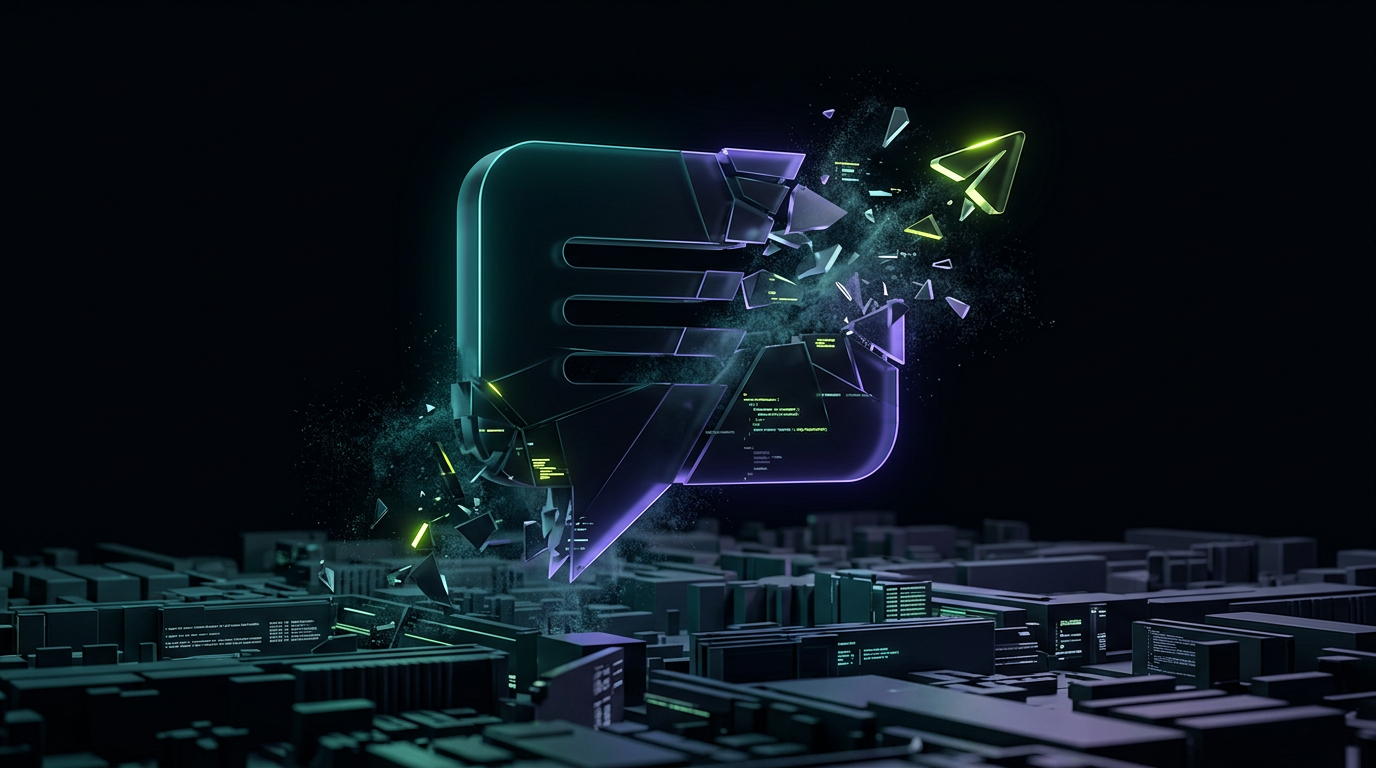
# The End of the Chatbot UI
The chatbot was a bridge, not a destination. It was a necessary, familiar interface to introduce a radically new technology to the world. But that phase is over, and clinging to the chat window is now holding us back.
Forcing powerful AI models to live inside a text box is like making a surgeon operate through a mail slot. It’s a clumsy, artificial constraint on a technology meant to be fluid. The end of the chatbot UI is not a prediction; it’s an observation of what’s already happening.
## The tyranny of the text box
The conversational interface feels intuitive for about five minutes. Then, you hit the wall. You are trapped in a request-response loop, forced to spoon-feed context to a machine with perfect recall but zero memory.
Each new chat is a blank slate. You have to re-explain the project, re-paste the document, re-state your goal. The AI has no awareness of the other 20 windows on your screen, the meeting you just left, or the deliverable that’s due tomorrow. It’s a brilliant oracle locked in a sensory deprivation tank, waiting for you to type the magic words.
This forces you to become a prompt engineer just to get your work done. The burden is on you to frame the perfect question, provide all the right context, and iterate until the output is usable. It’s not an assistant; it’s a high-maintenance intern.
## Why chat was a temporary fix
We needed a starting point. When large language models arrived, the most straightforward way to let people interact with them was through a user interface they already understood: the chat bubble. It mimicked iMessage and Slack, removing a layer of friction for first-time users.
It was the path of least resistance for developers and a gentle on-ramp for the public. But that convenience came with a cost. It anchored our collective imagination for what AI could be. It created the expectation that AI is something you *go to*—an app you open, a website you visit—rather than something that works *with you*.
This model is inherently siloed. The AI in your chat window can’t see the design in Figma or the numbers in your spreadsheet. To connect them, you’re back to the universal, low-tech solution: copy and paste.
## The future of AI interface is ambient
The next phase of AI interaction isn't a better chatbot. It's the dissolution of the interface altogether.
AI should be an ambient layer that operates in the background of your work. It should have secure, permissioned awareness of your context—the applications you use, the content you engage with—to assist you proactively. This is the shift from a conversational model to a contextual one. It’s the difference between asking for directions and having a GPS that automatically reroutes you around traffic.
This is the core of the post-chatbot AI evolution. The AI’s "interface" becomes ephemeral, appearing only when it has something useful to offer and disappearing when it doesn’t. It’s not another dashboard to monitor or inbox to clear. It’s a silent partner, anticipating your next move.
## Principles of post-chatbot AI
The move away from the chat window is guided by a few core principles. These aren’t features; they are fundamental requirements for AI to become a truly useful utility for professionals. An effective AI layer is defined by these characteristics.
### Context-aware
An ambient AI understands what you are doing, right now. It sees the email you’re writing, the client proposal you’re reviewing, and the Trello board you have open. It doesn’t need you to explain the situation, because it’s already there with you. This allows it to offer relevant, timely help without being asked.
### Proactive, not reactive
The chatbot waits for a command. An ambient AI identifies an opportunity and presents a solution. It sees you copy an address and offers to create a calendar event. It sees you highlight a paragraph of technical jargon and offers to simplify it for a client summary. This proactive assistance flips the model from you working for the AI to the AI working for you.
> The goal isn’t to get better at talking to computers. It's for computers to get better at understanding us without a conversation.
### Integrated, not siloed
True AI integration means it operates horizontally across your entire digital workspace. It’s not an AI *in Notion* or an AI *in Gmail*. It’s a single layer that connects them all. It can pull a quote from a transcript in your downloads folder and suggest it for the presentation you’re building in Pitch, all without you ever leaving the app.
### Ephemeral
The best interface is no interface. A post-chatbot AI doesn't demand screen real estate. It surfaces its suggestions in small, non-intrusive ways—a subtle notification, a contextual menu, a single button that accomplishes a multi-step task. **You interact with it for a moment, and then it’s gone.** It’s not another application you have to manage.
## What the end of the chatbot UI looks like
Talking about an "invisible interface" can feel abstract. In practice, it’s ruthlessly concrete. It’s about removing steps, saving seconds, and eliminating a thousand tiny frustrations that add up to a wasted day.
Consider a common workflow for a manager after a client call:
1. **Old Way:** You open your notes, try to decipher your handwriting, and find the key action items. You open Slack, find the right channel, and type out a summary of the action items for your team. Then you open your calendar, create an event for the follow-up, and invite the client. Finally, you open your CRM and log the call. It’s five different apps and ten minutes of tedious admin.
2. **Ambient Way:** The call ends. An AI that had access to the audio has already transcribed the conversation. A moment later, a small notification appears on your screen with the identified action items and their suggested assignees. You review the list, uncheck one, and click "Create Tasks." The tasks are now in Asana, the follow-up meeting is on your calendar, and the call is logged in Salesforce. You did it in one click.
This isn’t magic. It’s just better design. The AI is doing the rote work of translating intent into action across different systems. Your job is simply to confirm the intent. The interface was a single, temporary notification. That is the **end of the chatbot UI** in action.
* No prompt engineering required.
* No context-switching between apps.
* No copying and pasting.
* No wasted time.
The system understands the goal and handles the mechanics. You provide the judgment.
## Moving beyond the prompt
For a brief period, "prompt engineering" became a lauded skill. It was a sign of how primitive our interactions with AI really were—we had to learn the machine's language to get what we wanted. That era is closing.
The future of AI interaction is not about crafting the perfect sentence to get a good result. It’s about building systems where the AI understands your intent from your actions, not just your words. The prompt is your behavior. The context is your screen. The output is a completed task.
The conversational UI was a brilliant Trojan horse. It got AI into our lives. Now it’s time to let the AI out of the box.
---
This is not a theoretical future. At Aware, we've built the ambient AI layer that does this today. It works silently in the background of your Mac, connecting your apps and automating your workflows without ever asking you to open a chat window. You can [start using it for free](https://stayaware.ai/trial/handled).