What Is an AI Operating Layer? (And Why It's Not an App)
The term AI is stuck in a weird puberty. It's powerful, awkward, and shows up everywhere without a clear purpose. You have seventeen different AI apps: one to write emails, another to…
By The Aware Engineering Team
# What Is an AI Operating Layer? (And Why It's Not an App)
The term AI is stuck in a weird puberty. It's powerful, awkward, and shows up everywhere without a clear purpose. You have seventeen different AI apps: one to write emails, another to summarize meetings, a third to generate images of your dog as an astronaut. Each is a disconnected tool in a drawer full of other disconnected tools.
This isn’t progress. It's just a new kind of clutter. You’ve traded one form of work—actually doing the task—for another: managing a stable of single-purpose AI ponies. The promise of artificial intelligence was to reduce your cognitive load, not to give you a new checklist of apps to juggle.
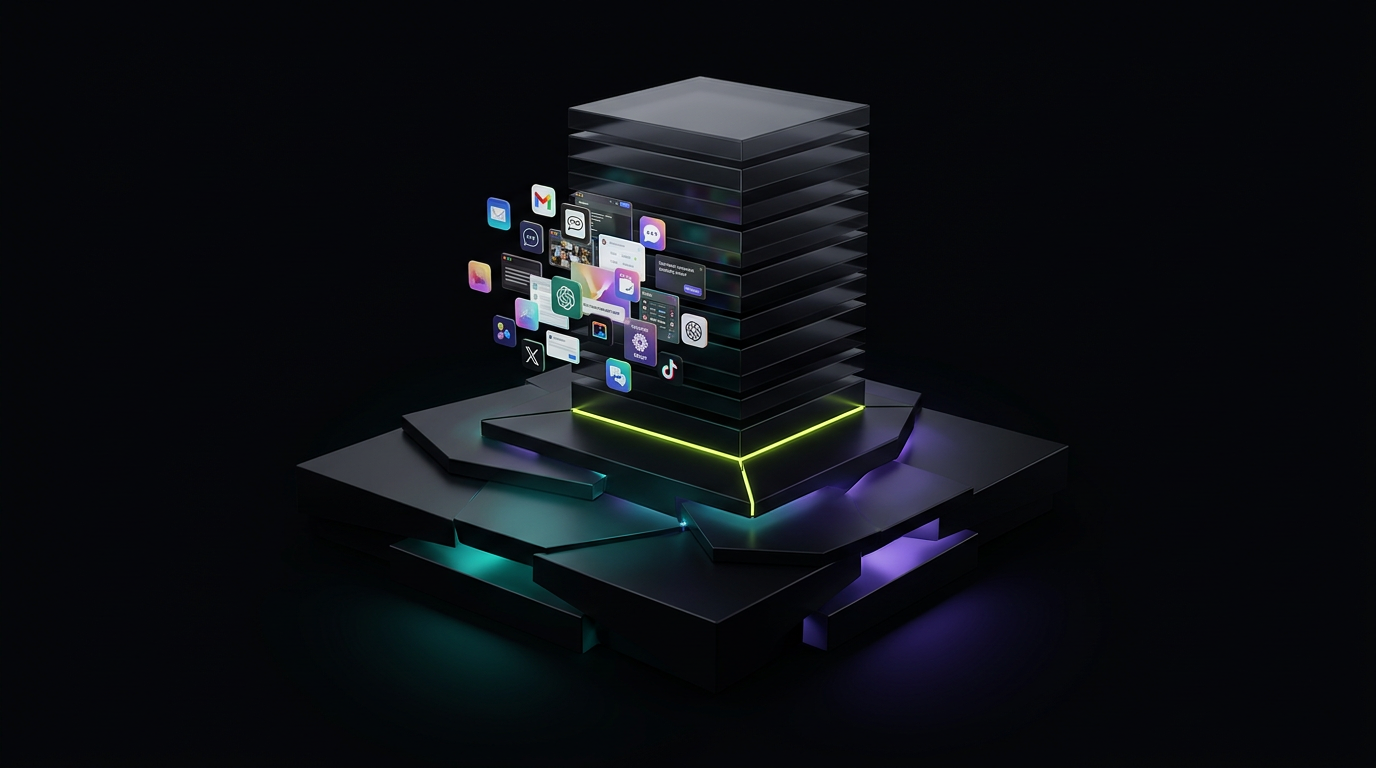
The solution isn't another app. It's an **ai operating layer**. A fundamentally different approach that makes AI a native part of your work, not another destination you have to visit.
## The Problem: An Army of Single-Task Robots
The current AI landscape is a collection of silos. A chatbot has no idea what’s on your calendar. Your meeting summarizer doesn't know about the follow-up email you just sent. They are powerful, but ignorant.
You are the human middleware. You’re the one copying text from a transcript, pasting it into a chatbot, editing the output, and then pasting that into an email. You’re the one manually feeding the machine context, over and over again. Each tool only knows what you tell it within the confines of its little box.
This brute-force approach is the exact opposite of intelligent. It creates friction and demands you learn a dozen new interfaces, each with its own quirks and limitations. The result is a workflow that feels less like the future and more like a frustrating digital arts and crafts project.
## So, What Is an AI Operating Layer?
An **ai operating layer** is not an application you open. It's an intelligent, contextual fabric that integrates with your existing tools. It sits quietly on top of your operating system—macOS, Windows—and observes the flow of your work.
Its job is to connect the dots.
Because it has access to your context (with your explicit permission, of course), it understands the relationships between things. It sees the email from a client, the follow-up Slack message, and the meeting you scheduled to discuss it. To an **ai operating layer**, these aren't three isolated events. They are a single, continuous narrative.
This allows it to be proactive. Instead of you telling an AI to summarize a meeting you just had, the layer knows the meeting happened, has the transcript, knows who was there, and proactively drafts the key takeaways and action items for you. It anticipates your needs instead of waiting for your command.
## Layer vs. OS: A Crucial Distinction
Some people hear "operating system" and think we're trying to replace macOS or Windows. We are not. Let's be clear about the terms.
An operating system (OS) is the foundational software that manages your computer’s hardware and resources. It runs the show at the deepest level. You can't run your computer without it.
An **ai operating layer**, by contrast, is an abstraction layer. It works *with* your existing OS, not against it. It doesn't require you to abandon the tools, files, and workflows you've spent years developing. It augments them. This is the core of a better **personal ai infrastructure**—one that enhances your current environment instead of forcing you into a new, unfamiliar one.
Think of it this way: your OS manages your files and applications. The AI layer manages the information and context that flows *between* them.
## How It Works: Context Is Everything
The difference between a dumb chatbot and a true intelligent assistant is one word: context. Most AI apps are stateless. They suffer from digital amnesia, forgetting everything the moment you close the tab. An **ai operating layer** is stateful. It builds a secure, private model of your work, your projects, and your priorities.
### Cross-App Awareness
A layer sees the whole board. It understands that the PDF a colleague shared in Slack is the same one being referenced in a long email thread. It knows the person you're meeting with at 3 PM is the same person who just sent you a connection request on LinkedIn. You don't have to explain these connections; the system understands them inherently. It's the kind of background processing we've always wanted from our computers but never had.
### Proactive Assistance
This awareness unlocks the ability to act without being asked. Because the layer understands the narrative of your work, it can surface the right information at the right time.
For example, Aware combines your schedule and outstanding tasks into a single, focused briefing. Instead of just a list of meetings, it might show you the relevant document for your next call or a summary of the last conversation you had with that person. As you can see in the Aware interface, it connects a client email to an upcoming meeting and a pending task, all in one view. It's not just showing you data; it's providing intelligence.
### Your Private Brain
This is not about feeding your data into a massive, global Large Language Model. The context an **ai operating layer** builds is yours and yours alone. It's your personal, private brain. This data is used to serve *you*, not to train a model for someone else. Your information remains your property, secured and used only to make your own experience better. It's a fundamental principle of building trustworthy **ambient ai**.
## Ambient AI: The Feeling of a System That Knows You
When an **ai operating layer** is working correctly, it disappears. The technology fades into the background, and you're left with a feeling of flow and support. This experience is what we call **ambient ai**.
You're not "using the AI" anymore. The intelligence is simply part of your environment.
It’s the draft of an email that’s 80% written before you even open the composer. It's the timely reminder of an action item buried in a long document. It’s the sense that your computer finally understands what you’re trying to accomplish.
It feels less like operating a new piece of software and more like collaborating with a hyper-competent assistant who has a perfect memory and zero ego.
## Why Not Just Another App?
An app is a destination. You have to decide to go there, open it, and feed it tasks. An **ai operating layer** is a capability that is woven through every destination you already visit.
It’s the difference between a standalone calculator app and having calculation functions built directly into every spreadsheet cell and text field on your computer. One is a tool you have to seek out; the other is a native power that's always available.
Specialized AI apps add another silo to your digital life. An **ai operating layer** is designed to break those silos down. It serves as the conductor for smaller, specialized **ai agents**, giving them the context they need to perform complex, multi-step tasks across different applications. The goal is to reduce your clicks, minimize context switching, and eliminate the manual labor of being your own AI wrangler.
The point of this technology is to do more by managing less. An ever-growing folder of single-purpose AI apps is a step in the wrong direction.
The current chaos of AI tools is a temporary phase. The future isn't more apps, but a more integrated and intelligent system. That system is the **ai operating layer**. It's what provides the contextual understanding and proactive assistance needed to make AI genuinely useful. It’s not just another piece of software you have to manage; it's the intelligence that makes all your software work better, together. The **ai operating layer** is the real promise of personal AI, finally shipped.
The concepts we've discussed—contextual awareness, proactive assistance, an ambient interface—are not theoretical. This is Aware. We built the AI operating layer we wanted for ourselves, and now we're opening it up. If you're ready to trade a dozen single-task AI apps for one system that just works, sign up to try Aware for free.